
In 2016, brands fought tooth and nail for Google’s first page. In 2026, they’re fighting for something even harder to earn: a mention inside an AI-generated answer.
Think about how you search today. Are you still opening ten browser tabs and clicking through links one by one? Probably not. More and more, people are just asking ChatGPT, Gemini, Perplexity, or Google’s AI Overviews, and getting a fully synthesized answer in seconds.
That single shift changes everything for brands. Because if your business isn’t in the answer AI gives, it might as well not exist for that user. That’s where GEO comes in and why you need to understand it right now.
So, What Exactly Is GEO?
GEO (Generative Engine Optimization) is the practice of optimizing your content and digital presence so that AI-powered engines like ChatGPT, Gemini, Claude, and Google AI Overviews discover, trust, cite, and recommend your brand when generating answers for users.
Where traditional SEO asks “How do I rank #1 on Google?”, GEO asks a fundamentally different question: “How do I become part of the answer AI gives users?”
GEO focuses on AI visibility, brand mentions inside generated responses, trust and authority signals, and contextual relevance, the things AI systems actually weigh when deciding whose brand to reference.
Why Does GEO Matter So Much Right Now?
Let’s be real, AI search isn’t some distant future. It’s already the first stop for millions of users looking for product recommendations, service providers, and answers to every kind of question. Platforms like ChatGPT, Gemini, and Google AI Overviews have fundamentally changed how information is discovered.
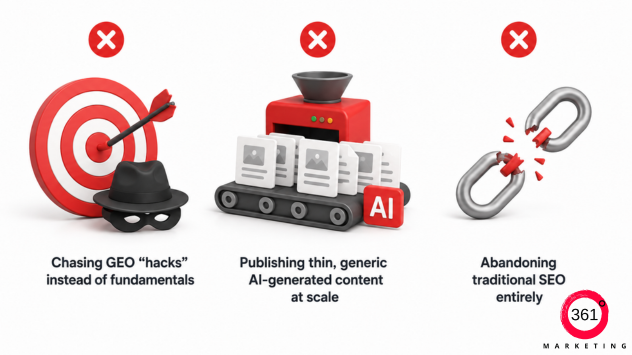
Here’s the shift in plain terms:
The old way: User types a query → sees 10 blue links → clicks around → maybe finds what they need.
The new way: User asks a question → gets a complete, synthesized answer → takes action immediately.
Fewer clicks mean fewer opportunities for brands that rely entirely on traditional SEO. If AI doesn’t mention you, that user’s journey ends without you ever entering the picture.
GEO vs. SEO: Are They Really That Different?
Yes and no. Think of it this way: SEO got you on the map. GEO gets you into the conversation.
| SEO | GEO |
| Optimizes for search engines | Optimizes for AI engines |
| Goal: Rankings | Goal: AI citations & mentions |
| Keyword-focused | Entity and authority-focused |
| Success = traffic | Success = being recommended |
| Competes for clicks | Competes for inclusion in answers |
Here’s the important part: GEO does not replace SEO. Strong traditional SEO remains the foundation; crawlable pages, solid content, and authority signals are still critical. GEO extends that visibility into the AI-generated spaces where users increasingly make decisions. Think of them as complementary layers of the same strategy.
How Does AI Actually Decide Which Brands to Mention?
This is the question everyone wants answered. The truth is that AI systems don’t work on a simple ranking algorithm. They’re weighing several signals simultaneously, and the brands that check the most boxes win the most mentions.
01 Authority Across the Web
Brands frequently referenced on trusted external sites are far more likely to appear in AI answers. Your credibility isn’t just what you say about yourself; it’s what others say about you.
02 Structured, Clear Content
AI prefers content that is organized, fact-rich, and easy to summarize. Research confirms that structured content significantly increases the likelihood of citations.
03 Trust Signals & Reviews
Brands with strong review profiles show up significantly more in AI-generated answers. Positive sentiment shapes how AI describes your company, and whether it describes it at all.
04 Consistency of Expertise
When a brand communicates the same expertise across its website, social media, directories, and publications, AI builds stronger confidence associating that brand with a topic.
What GEO Strategies Should Your Brand Actually Adopt?
Create Answer-Focused Content
Stop writing content that only targets keywords. Start writing content that directly answers the questions your audience is typing into AI. Think: “What is [your service]?”, “How does [your product] work?”, “Why should I use [solution category]?”, and answer them clearly, concisely, and completely. AI extracts direct, well-organized explanations. Give it exactly that.
Build Deep Topic Authority
The more comprehensively you cover your area of expertise, the more likely AI will associate your brand with that category. Publish clusters of content around your core topics, not one blog post every few months, but a body of work that signals you truly own that space. The wider your coverage, the stronger your authority profile becomes in the eyes of AI systems.
Use Data, Statistics, and Real Examples
Research on GEO consistently shows that content containing statistics, facts, citations, and concrete examples is cited more frequently by AI systems. If your content is all claims and no evidence, it’s easy for AI to skip. Back up every key point. Include numbers. Reference studies. Give AI something worth quoting.
Worth knowing: A 2026 Trustpilot study found that brands with strong review profiles appeared significantly more often in AI-generated answers compared to brands with thin or negative review histories. Your reputation online isn’t just a PR concern; it’s a GEO signal.
Earn Third-Party Mentions
AI trusts brands that are talked about beyond their own websites. That means getting covered in industry publications, earning guest article placements, appearing on podcasts, getting mentioned in news coverage, and building a genuine review presence. The more independent references that exist about your brand online, the stronger your authority profile, and the more likely AI is to cite you.
Protect and Actively Shape Your Brand Reputation
AI isn’t neutral about brands. It increasingly incorporates sentiment when discussing companies, and negative reviews or public controversies can influence how (and whether) AI recommends you. Fresh positive customer content, proactive reputation management, and a consistent brand narrative help shape the AI perception of your business.
What Are the Biggest GEO Mistakes Brands Make?
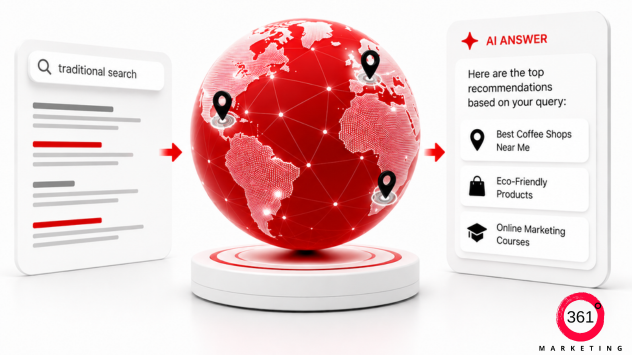
Chasing GEO “hacks” instead of fundamentals
Many marketers look for shortcuts. The reality? Strong content fundamentals are what AI actually rewards. Tricks don’t build trust; quality does.
Publishing thin, generic AI-generated content at scale
Mass-producing generic articles reduces your authority and differentiation. As AI-generated content floods the web, repetitive and low-value content risks becoming invisible to both users and AI systems.
Abandoning traditional SEO entirely
Without crawlable pages, strong content structure, and existing authority signals, GEO efforts have no foundation to build on. The two work together; neither replaces the other.
How Do You Know If Your GEO Is Actually Working?
Measuring GEO looks different from measuring traditional SEO. You’re not watching keyword rankings, you’re watching brand presence inside AI-generated conversations. Here’s what to track:
- AI mentions
- AI citations across platforms
- Brand visibility in ChatGPT
- Gemini & Perplexity presence
- Share of voice in AI answers
- Sentiment of AI brand descriptions
New GEO-specific tools are emerging specifically to measure AI visibility, not rankings. If you’re not yet tracking these metrics, now is the time to start building that baseline.
SEO helped brands get found. GEO helps brands get recommended.
What Does the Future of Search Look Like, and Where Does Your Brand Fit?
The future of search is answer-driven, not link-driven. Users are already defaulting to AI for product research, recommendations, and decisions. Brands that optimize only for traditional search rankings will find themselves increasingly invisible as AI assistants become the primary gateway to information.
GEO isn’t a trend you can afford to “wait and see” on. The brands building authority, trust, and AI-friendly content right now will be the ones users hear about and act on tomorrow. Winning online in 2026 isn’t just about appearing in search results. It’s about becoming part of the answer.
Ready to get cited by AI?
Your brand deserves to be in the answer, not left out.
Navigating GEO, AI visibility, and modern brand strategy takes more than a blog post. It takes a team that lives and breathes this stuff every single day. If you want your brand to show up where your customers are already looking, let’s talk.
-
What is GEO and how is it different from SEO?
GEO (Generative Engine Optimization) focuses on getting your brand mentioned in AI-generated answers from platforms like ChatGPT, Gemini, Claude, and Google AI Overviews. While SEO helps your website rank in search results, GEO helps your brand become part of the answer users receive. The most effective digital strategies in 2026 combine both SEO and GEO for maximum visibility.
-
Why is my brand not appearing in ChatGPT or AI search results?
AI platforms prioritize brands that demonstrate authority, trust, expertise, and consistent online presence. If your website lacks high-quality content, third-party mentions, strong reviews, or structured information, AI systems may overlook your brand. A dedicated GEO strategy can improve your chances of being cited and recommended.
-
Can GEO help my business generate more leads?
Yes. As more consumers rely on AI assistants for recommendations, being mentioned in AI-generated responses can significantly increase brand awareness, trust, and qualified leads. GEO helps position your business where customers are already searching for answers and solutions.
-
How long does it take to see results from GEO?
GEO is a long-term strategy, much like SEO. Results depend on your website authority, content quality, brand reputation, and industry competition. Businesses that consistently publish expert content, earn third-party mentions, and strengthen their digital presence often see improvements in AI visibility over time.
-
Can 361 Degrees Marketing help my business with GEO?
Absolutely. At u003cstrongu003eu003ca href=u0022https://361degreesmarketing.comu0022 target=u0022_blanku0022 rel=u0022noreferrer noopeneru0022u003e361 Degrees Marketingu003c/au003eu003c/strongu003e, we help businesses build AI-ready digital strategies through GEO, SEO, content marketing, brand authority development, and reputation management. Our team works to improve your visibility across both traditional search engines and emerging AI-powered platforms, helping your brand get found, cited, and recommended in 2026 and beyond.