
Before, businesses relied on familiar newspapers, hoardings, TV ads, and word of mouth to stay visible. Marketing success was measured by presence, not performance.
After everything changed, digital platforms arrived, data took control, and now AI is reshaping how decisions are made.
Understanding the difference between traditional and digital marketing is no longer enough. Today, businesses must also recognize how AI marketing has transformed speed, accuracy, and personalization. This shift is not about replacing old methods; it’s about evolution.
This article breaks down nine accurate differences using a before vs after narrative, showing how marketing moved from assumption-based decisions to data- and intelligence-driven growth.
Understanding the Difference Between Traditional and Digital Marketing
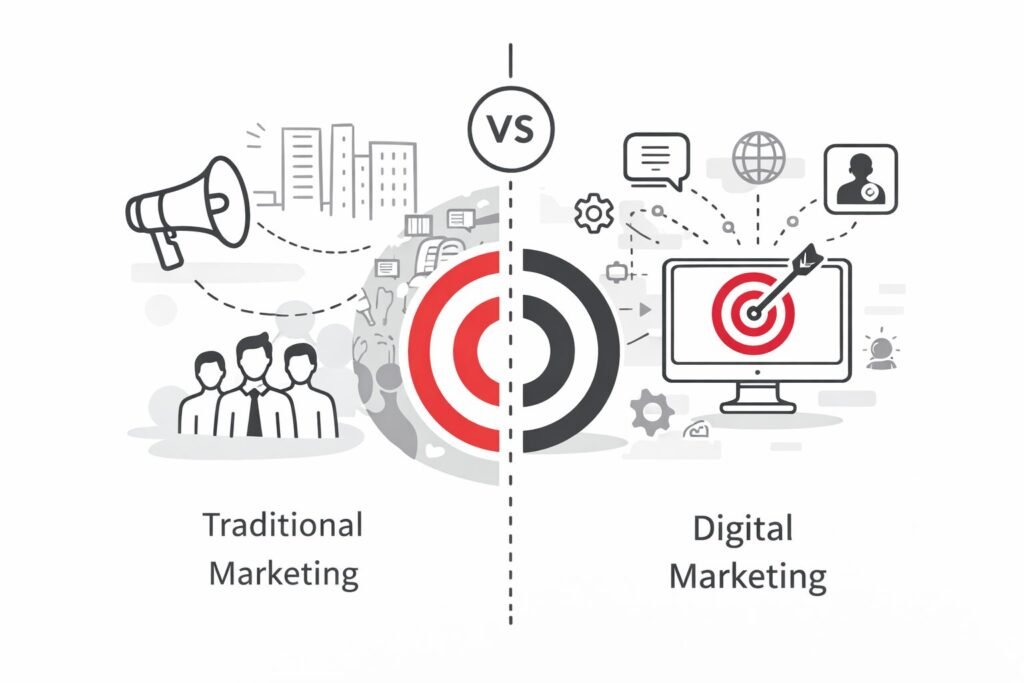
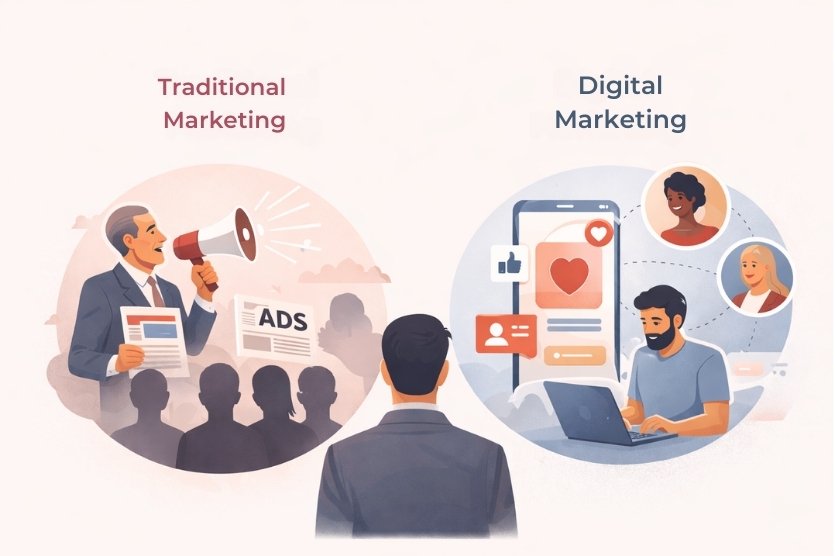
The difference between traditional and digital marketing begins with how audiences are reached and measured. Traditional marketing depends on offline channels such as newspapers, radio, television, and outdoor advertising. It focuses on mass reach and long-term recall.
Digital marketing introduced online platforms, real-time tracking, and targeted communication. AI marketing has taken it further, automating analysis, predicting behavior, and optimizing campaigns instantly. Understanding this progression helps businesses choose smarter strategies rather than outdated habits.
1. Reach the Difference Between Traditional and Digital Marketing
Before: Limited Reach in Traditional Marketing
Before digital platforms, the difference between traditional and digital marketing was clear in reach. Traditional marketing was limited by geography. A newspaper ad or billboard reached only local audiences.
After: Unlimited Reach Through Digital and AI Marketing
After digital and AI integration, reach became borderless. Businesses can now target audiences across locations, platforms, and time zones with precision, redefining the difference between traditional and digital marketing.
2. Cost Structure in the Difference Between Traditional and Digital Marketing
Before: High Fixed Costs in Traditional Marketing
Earlier, the difference between traditional and digital marketing showed clearly in cost. Print ads and TV commercials required heavy upfront investment with uncertain returns.
After: Flexible Budgets With Digital and AI Marketing
Digital marketing introduced flexible spending, while AI marketing optimizes budgets automatically. Businesses now pay for performance, not assumptions, strengthening the difference between traditional and digital marketing.
3. Targeting the Difference Between Traditional and Digital Marketing
Before: Broad Targeting in Traditional Marketing
Traditional marketing spoke to everyone, whether they needed the service or not. The difference between traditional and digital marketing lies in the lack of precision.
After: Hyper-Targeting With Digital and AI Marketing
Digital marketing targets users by intent and behavior. AI marketing enhances this by predicting needs, making the difference between traditional and digital marketing more impactful and efficient.
4. Communication Style in the Difference Between Traditional and Digital Marketing
Before: One-Way Communication in Traditional Marketing
Traditional marketing delivered messages without feedback. Customers listened but rarely responded.
After: Interactive Communication With Digital and AI Marketing
Digital platforms allow two-way conversations. AI tools analyze responses instantly, highlighting a major difference between traditional and digital marketing.
5. Speed in the Difference Between Traditional and Digital Marketing
Before: Slow Execution in Traditional Marketing
Campaigns once took weeks to launch. Changes were expensive and time-consuming.
After: Instant Execution With Digital and AI Marketing
Digital campaigns launch within hours. AI marketing adjusts creatives in real time, accelerating the difference between traditional and digital marketing.
6. Measurement in the Difference Between Traditional and Digital Marketing
Before: Assumptions in Traditional Marketing
Success was estimated through indirect signs like footfall or calls.
After: Data Accuracy With Digital and AI Marketing
Digital marketing provides real-time metrics, while AI interprets data patterns, clearly defining the difference between traditional and digital marketing.
7. Personalization in the Difference Between Traditional and Digital Marketing
Before: Same Message for Everyone
Traditional marketing used generic messaging for all audiences.
After: Personalized Experiences With AI Marketing
Digital platforms personalize content, and AI marketing adapts messaging automatically, showcasing a modern difference between traditional and digital marketing.
8. Scalability in the Difference Between Traditional and Digital Marketing
Before: Scaling Was Expensive
Expanding traditional campaigns meant higher costs and logistics.
After: Effortless Scaling With Digital and AI Marketing
Digital marketing scales instantly. AI ensures efficiency, reinforcing the difference between traditional and digital marketing.
9. Decision-Making in the Difference Between Traditional and Digital Marketing
Before: Intuition-Based Decisions
Marketing decisions were based on experience and guesswork.
After: Predictive Decisions With AI Marketing
AI marketing predicts outcomes before campaigns run. This intelligence-driven approach completes the evolution in the difference between traditional and digital marketing.
Conclusion: From Before to After Marketing’s Real Transformation
The difference between traditional and digital marketing is not about old versus new; it’s about evolution. Traditional marketing built familiarity. Digital marketing introduced control. AI marketing now delivers intelligence.
Businesses that understand this shift move from reactive strategies to proactive growth. By combining trust, data, and automation, brands can create sustainable, future-ready marketing systems.
For more information, visit 361 Degrees Marketing.